
| Typ <itemType> |
Objekt/föremål |
| Datering <presTimeLabel> |
C.H. (325-50 BC) |
| Plats <presPlaceLabel> |
Europa, Cypern, Soli |
| Description <itemDescription> |
|
| Inventory number <itemDescription> |
|
| Acquisition <itemDescription> |
|
| Comments <itemDescription> |
-
Previously unpublished. Inventory number given by Anna Abenius during her work with her paper Ten terracotta heads from Soloi in Cyprus. Description and Analysis, C-uppsats, Stockholms universitet 200...
Visa hela
Previously unpublished. Inventory number given by Anna Abenius during her work with her paper Ten terracotta heads from Soloi in Cyprus. Description and Analysis, C-uppsats, Stockholms universitet 2001.
Stäng
|
| Condition <itemDescription> |
|
| Dimensions <itemDescription> |
|
| Context <itemDescription> |
|
| Source / http <itemDescription> |
|
| Country / Findspot <itemDescription> |
|
| Exhibition / Planned <itemDescription> |
|
| Description, Swedish <itemDescription> |
|
| Geographic name, alternative / Swedish <itemDescription> |
|
| Exhibition, showcase / Planned <itemDescription> |
|
| Antika mysterier, text sv <itemDescription> |
|
| Antika mysterier, text eng <itemDescription> |
-
One of the Mother’s commonly depicted attributes is her headpiece (or polos) shaped like city walls, symbolizing her role as a protector of cities. Especially in western Anatolia, many cities called u...
Visa hela
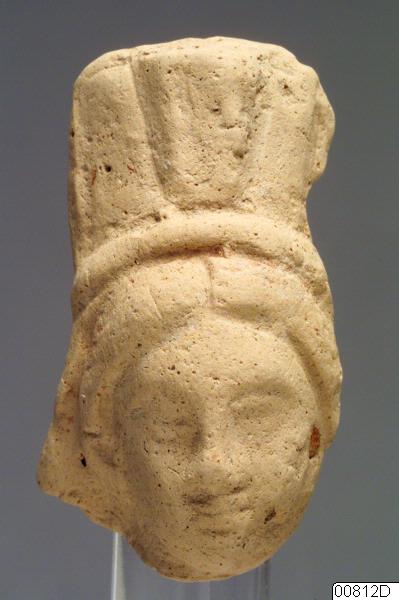
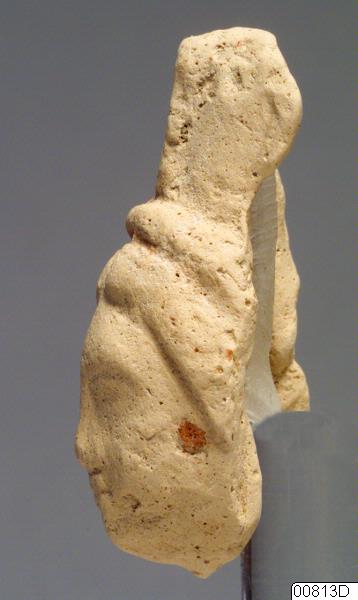
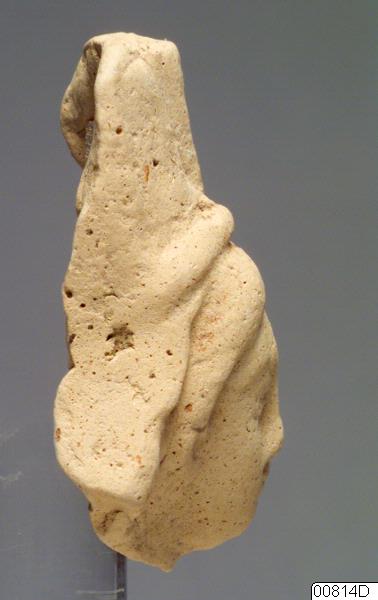
One of the Mother’s commonly depicted attributes is her headpiece (or polos) shaped like city walls, symbolizing her role as a protector of cities. Especially in western Anatolia, many cities called upon her as a protector. This role also played a central part as the cult of the Mother was brought to Rome at the end of the third century BCE. According to the historian Livy, as Hannibal was ravaging Italy during the Second Punic War, the Romans consulted the Sibylline Books (a collection of prophetic utterances) and discovered a prophecy that said that if ever a foreign enemy should invade Italy, he could be defeated and driven out if the Mother was brought from Anatolia to Rome. A Roman delegation went to the kingdom of Pergamum and gathered the sacred stone that was the cult image of the Mother, whose full title in Rome would become “Magna Mater Deorum Idaea” (the Great Mother of the Gods of Mount Ida). This connected her cult to Rome’s legendary origins, since Mount Ida is close to Troy, the home of Aeneas, and the Mother of the gods thus also became a Mother of the Romans. A temple was built for her on the Palatine Hill, in the heart of the city, and dedicated in 191 BCE. At some point soon after the arrival of the cult a festival was introduced in her honour, called the Megalesia (her name in Pergamum was Meter Megale, “Great Mother”), which soon lasted a week and included chariot racing. This terracotta head probably belongs to a votive figurine depicting the Mother, with a tall polos in the shape of city walls. The head was recovered from Temple A of Soli during the Swedish Cyprus Expedition in 1930.
Stäng
|
| Händelse <context> |
-
Brukad C.H. (325-50 BC).
-
Funnen i Soli, Cypern, Europa.
|
| Material, engelska<itemMaterial> |
- Pottery
- Earthenware
- Terracotta
- Clay
|
| Material<itemMaterial> |
- Lera
- Keramik
- Keramik
- Terrakotta
|
| Nyckelord <itemKeyWord> |
-
C.H. (325-50 BC)
-
Google Art 2019
-
Svenska Cypernexpeditionen
-
Swedish Cyprus Expedition (1927-1931)
-
ceramics
|
| Mått <itemMeasurement> |
-
Height / Höjd: 4,2 cm.
-
Width / Bredd: 2,2 cm.
|
| Object, Swedish<itemName> |
- skulptur
|
| Object<itemName> |
- fragment
- sculpture
|
| Ämne <subject> |
|
| Inventory number <itemNumber> |
|
| Rättigheter för metadata <itemLicense> |
|
| Källa <presOrganization> |
Statens museer för världskultur - Medelhavsmuseet |
|
Källa <url>
|
|