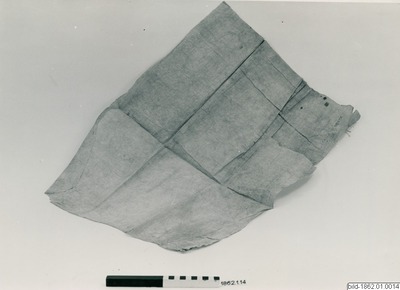
| Typ <itemType> |
Objekt/föremål |
| Plats <presPlaceLabel> |
Oceanien, Franska Polynesien, Tahiti, Society Islands |
| Beskrivning <itemDescription> |
|
| Anmärkning <itemDescription> |
-
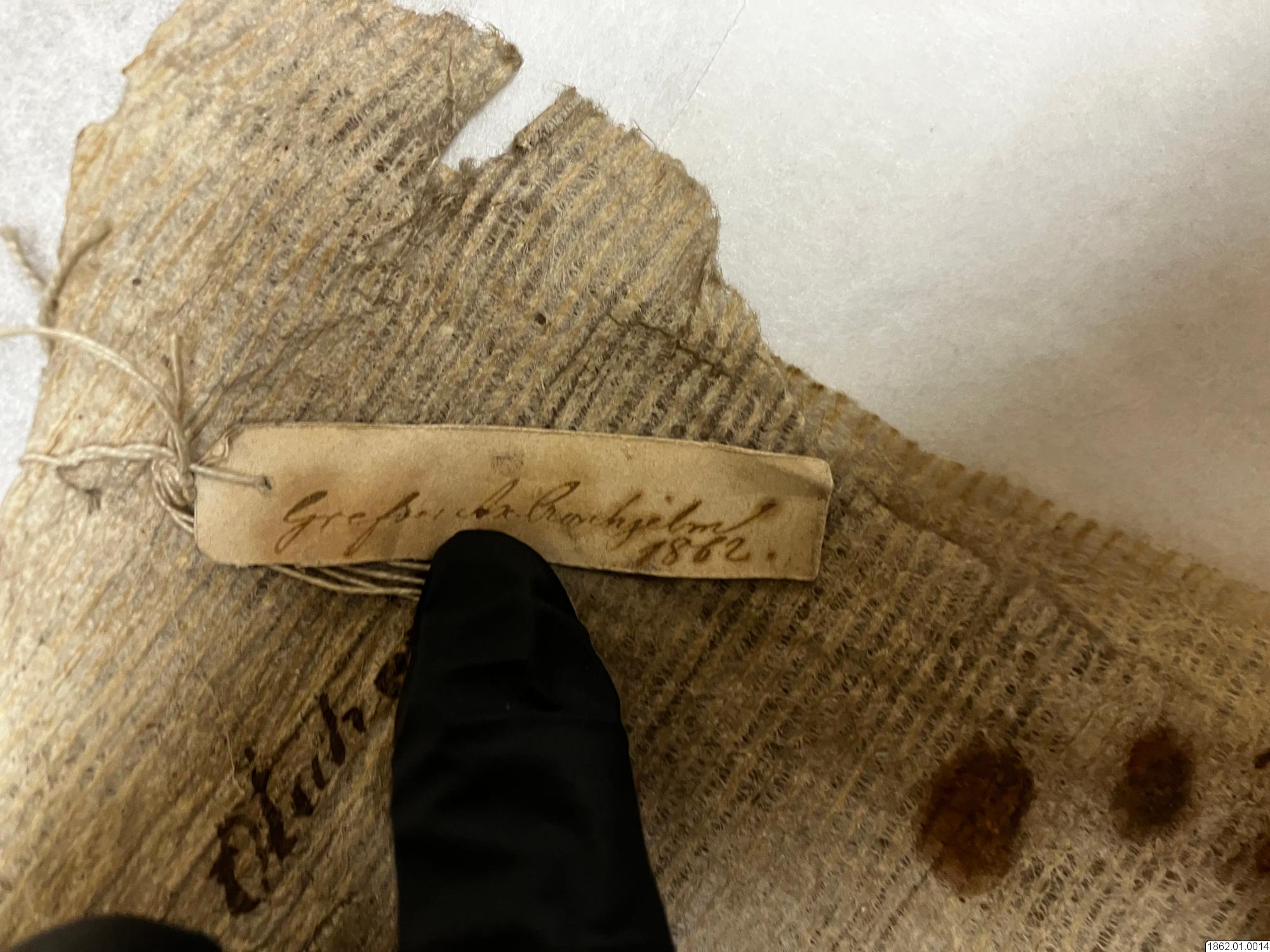
Provenance: Donated in 1862 by Count Axel Theodor Polykarpus Cronhielm af Hakunge (1829–1899), a Swedish nobleman and officer in the Royal Swedish Navy. At the time of the donation, Cronhielm had rec...
Visa hela
Provenance: Donated in 1862 by Count Axel Theodor Polykarpus Cronhielm af Hakunge (1829–1899), a Swedish nobleman and officer in the Royal Swedish Navy. At the time of the donation, Cronhielm had recently returned from several years of service in the Pacific region. From 1859 to 1862, he served with the British Pacific Station, first on HMS Topaze and later on HMS Calypso. The Pacific Station operated from bases at Valparaíso on the South American coast and Sydney in Australia, from which ships were dispatched on extensive annual cruises through various Pacific Island groups. These voyages involved navigating poorly charted waters, addressing diplomatic and consular matters, and responding to conflicts involving local communities, missionaries, or European residents.
The exact circumstances under which Cronhielm acquired the tapa are not recorded, but it was most likely obtained during his period of service in the Pacific before his return to Europe in 1862.
(Héloise Dazard 2025).
Stäng
|
| Anmärkning <itemDescription> |
-
Like in many islands of Polynesia, the making of barkcloth — known as tapa — in Tahiti was traditionally the domain of women. Tapa is a type of cloth crafted from the soft inner bark (bast) of certain...
Visa hela
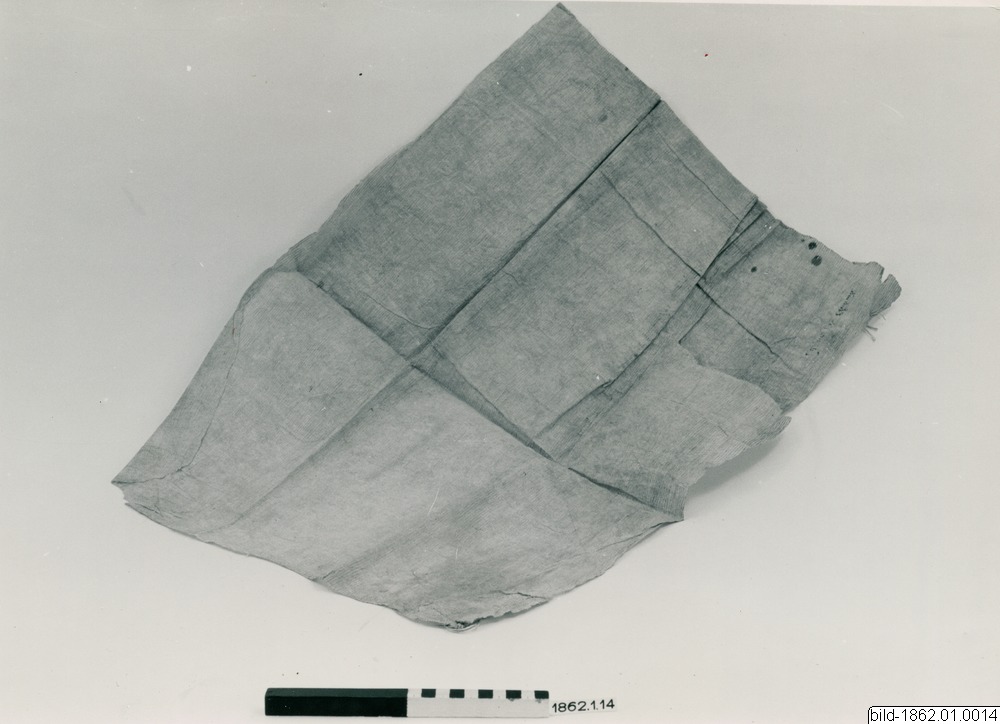
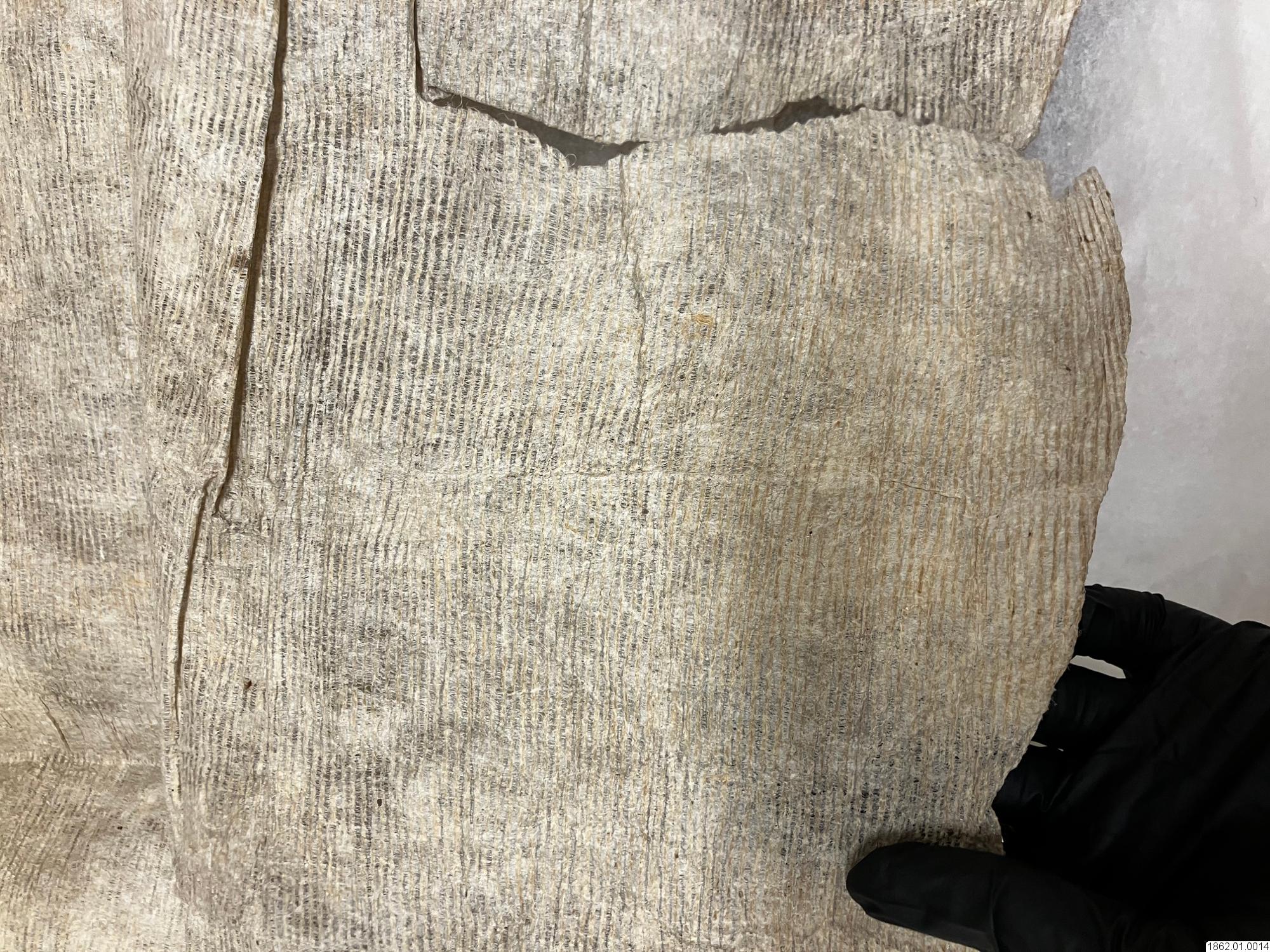
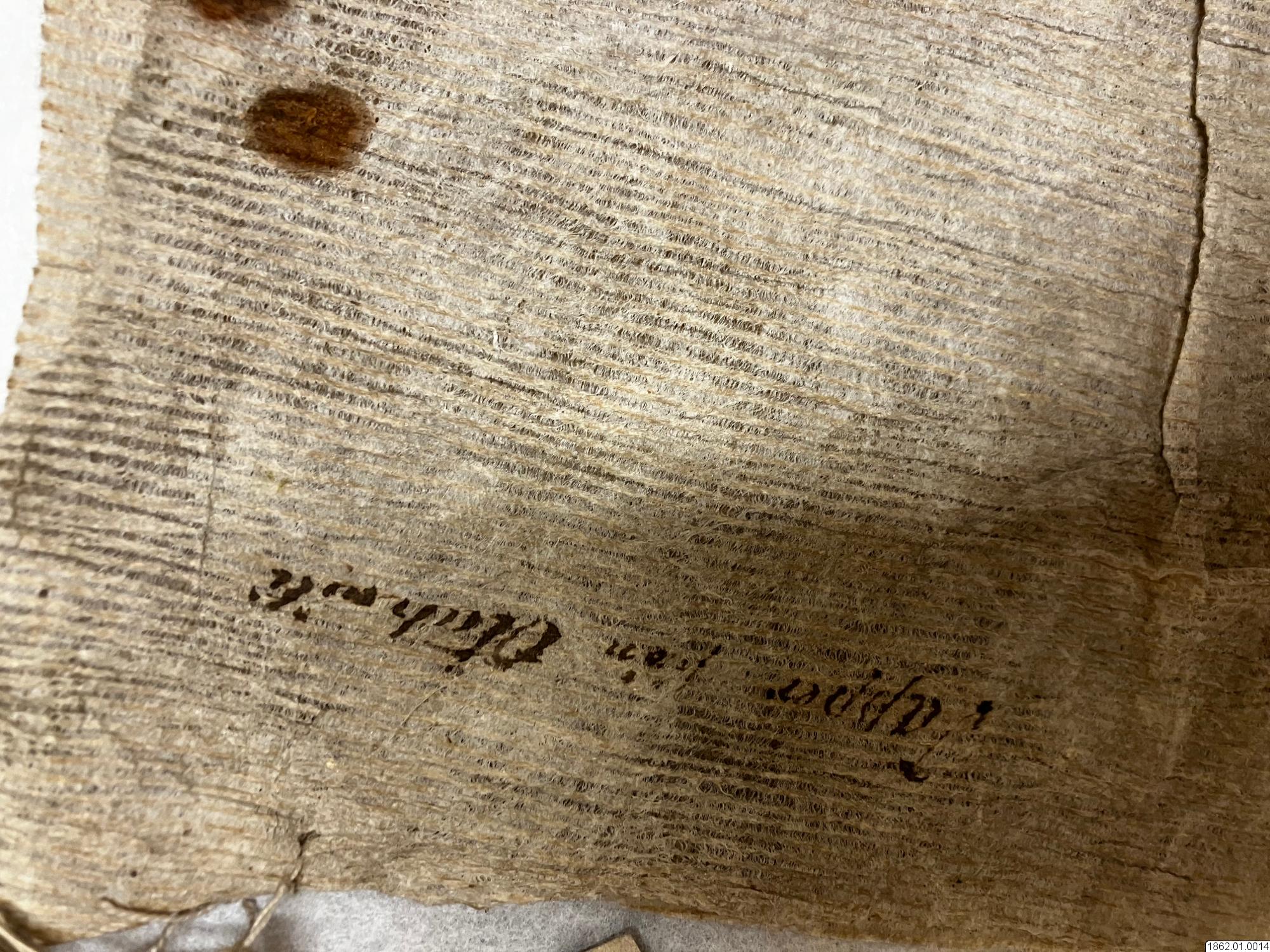
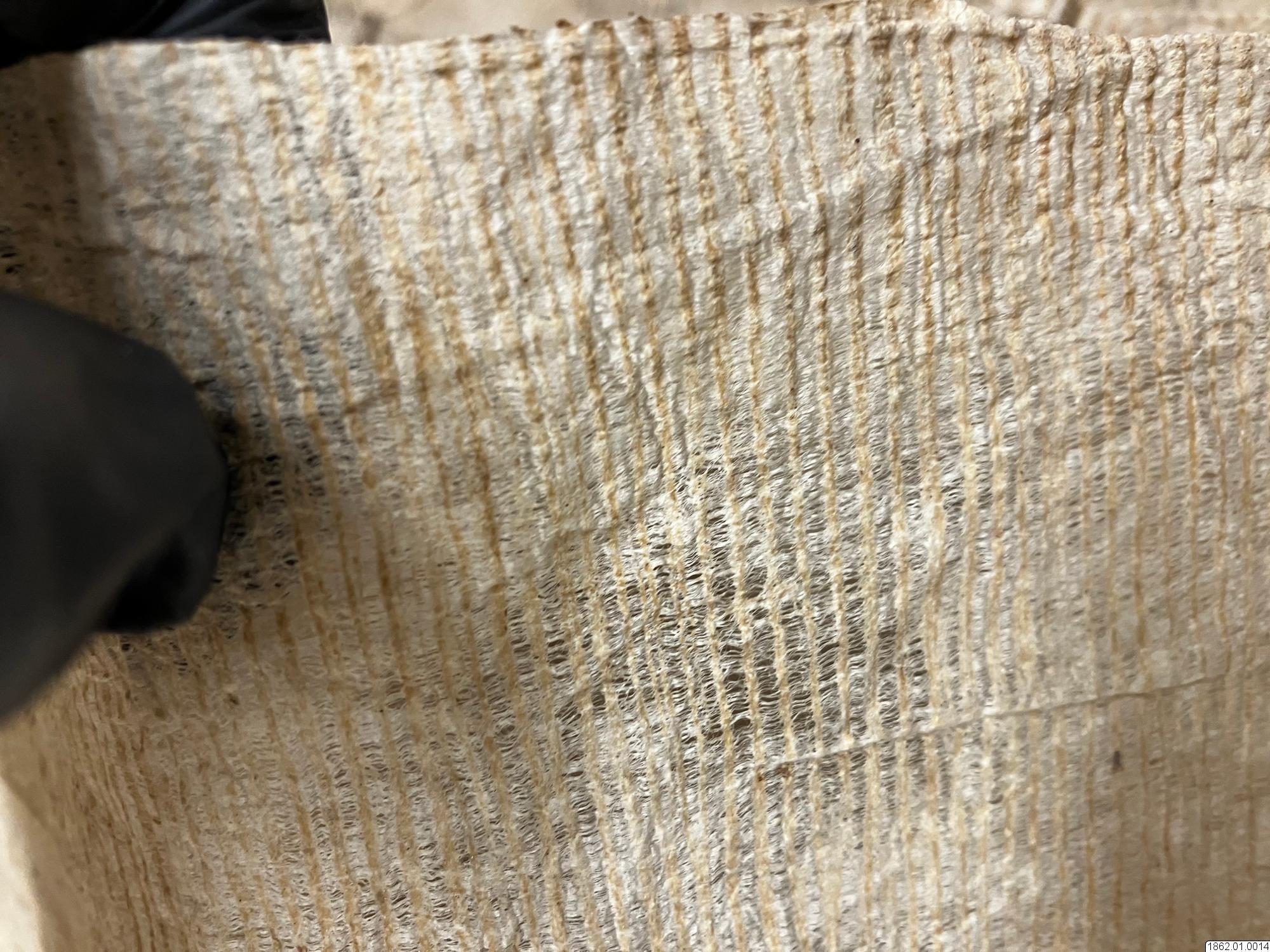
Like in many islands of Polynesia, the making of barkcloth — known as tapa — in Tahiti was traditionally the domain of women. Tapa is a type of cloth crafted from the soft inner bark (bast) of certain trees. Before the widespread use of European textiles, it was produced and used across the Pacific for both everyday and ceremonial purposes. In Tahiti, tapa is specifically called ahu. The paper mulberry tree (Broussonetia papyrifera) was the primary source, producing a naturally white cloth. After being soaked and left to ferment, the strips of bast were beaten on a wooden anvil using a beater made from the hard wood of the toa tree (Casuarina equisetifolia). The beaters could be carved with longitudinal grooves, which leaves linear impressions on the cloth, as seen in this example. Larger sheets of tapa could be made by felting the edges together through additional beating or by pasting them with a glue prepared from the starch of arrowroot (Tacca pinnatifida). In Western eyes, undecorated tapa was long regarded simply as plain cloth, with little aesthetic appeal and therefore little value. Yet these unadorned pieces could hold deep significance in sacred contexts. In Tahiti, people of high rank wore garments and accessories made from white tapa. Young women of chiefly families also wore long white tapa dresses. Priests used white tapa turbans, as the head was considered the seat of mana and thus the most sacred part of the body. Rolls of plain white tapa used in ceremonies were carefully stored in the fare-ia-manaha, a sacred repository where priests’ garments were also kept, wrapped in tapa.
Carved divine figures could be wrapped in layers of undecorated tapa to contain and channel their power, protecting people from a force that might otherwise be overwhelming or dangerous. Plain white tapa was likewise associated with the realm of the dead, where it served as a funerary shroud. These seemingly simple cloths were therefore sometimes far more than everyday objects. Their use shows how tapa functioned as a protective envelope and a tangible medium for communication with the sacred. This divine dimension is rooted in the myth of the goddess Hina. According to the story, Hina lived on the moon, where she beat bark to create cloth for the gods. When a branch accidentally fell to earth, it gave rise to the first earthly tapa tree. Tapa was thus understood as a fabric of celestial origin, linked to lunar purity and serving as a bridge between humans and the divine. (Héloise Dazard 2025).
Stäng
|
| Källor <itemDescription> |
-
Bach, John. "The Royal Navy in the Pacific Islands". in The Journal of Pacific History, Vol.3, 1968, p.3-20
|
| Källor <itemDescription> |
-
Gough, Barry M. "The Records of the Royal Navy's Pacific Station". in The Journal of Pacific History, Vol.4, 1969, p.146-153
|
| Källor <itemDescription> |
|
| Källor <itemDescription> |
-
Guiot Hélène. "Valeurs et usages des tapa non décorés de Polynésie et Fidji". In Tapa : de l’écorce à l’étoffe, art millénaire d’Océanie, de l’Asie du sud-est à la Polynésie orientale, ed. Michel Char...
Visa hela
Guiot Hélène. "Valeurs et usages des tapa non décorés de Polynésie et Fidji". In Tapa : de l’écorce à l’étoffe, art millénaire d’Océanie, de l’Asie du sud-est à la Polynésie orientale, ed. Michel Charleux. Paris, Tahiti : Somogy éditions d’art, 2017, p.312-317
Stäng
|
| Geografiskt namn / annat <itemDescription> |
|
| Geografiskt namn / annat <itemDescription> |
|
| Geografiskt namn / annat <itemDescription> |
|
| Geografiskt namn / annat <itemDescription> |
|
| Geografiskt namn / annat <itemDescription> |
|
| Geografiskt namn / annat <itemDescription> |
|
| Land / engelska <itemDescription> |
|
| Källor / http <itemDescription> |
|
| Geografiskt namn / annat <itemDescription> |
|
| Geografiskt namn / annat <itemDescription> |
|
| Geografiskt namn / annat <itemDescription> |
|
| Händelse <context> |
-
Insamlad av Cronhielm, Axel Polykarpus.
-
Ursprung i Society Islands, Franska Polynesien, Oceanien.
-
Förvärvad 1862 .
|
| Material, engelska<itemMaterial> |
- plant fiber
|
| Materialkategori<itemMaterial> |
- växtmaterial
|
| Material<itemMaterial> |
- växtfiber
|
| Nyckelord <itemKeyWord> |
|
| Mått <itemMeasurement> |
-
Längd: 41 cm.
-
Bredd: 28 cm.
|
| Lokalt namn<itemName> |
- ahu
|
| Sakord, engelska<itemName> |
- barkcloth
|
| Sakord<itemName> |
- barktyg
- tapa
|
| Ämne <subject> |
|
| Inventarienummer <itemNumber> |
|
| Tidigare identitet <itemNumber> |
|
| Rättigheter för metadata <itemLicense> |

|
| Källa <presOrganization> |
Statens museer för världskultur - Etnografiska museet |
|
Källa <url>
|
|

 ARTIKLAR I WIKIPEDIA
 ARTIKLAR I WIKIDATA
 BILDER I WIKIMEDIA COMMONS