| Typ <itemType> |
Objekt/föremål |
| Plats <presPlaceLabel> |
Afrika, Zambia |
| Beskrivning <itemDescription> |
|
| Publicerad text, engelska <itemDescription> |
-
"The third net, Fig. 226, which measures only 66 cm. in length and 32 cm. in width, however, is manufactured in a completely different way. It consists, as the picture shows, of long sticks and pipe s...
Visa hela
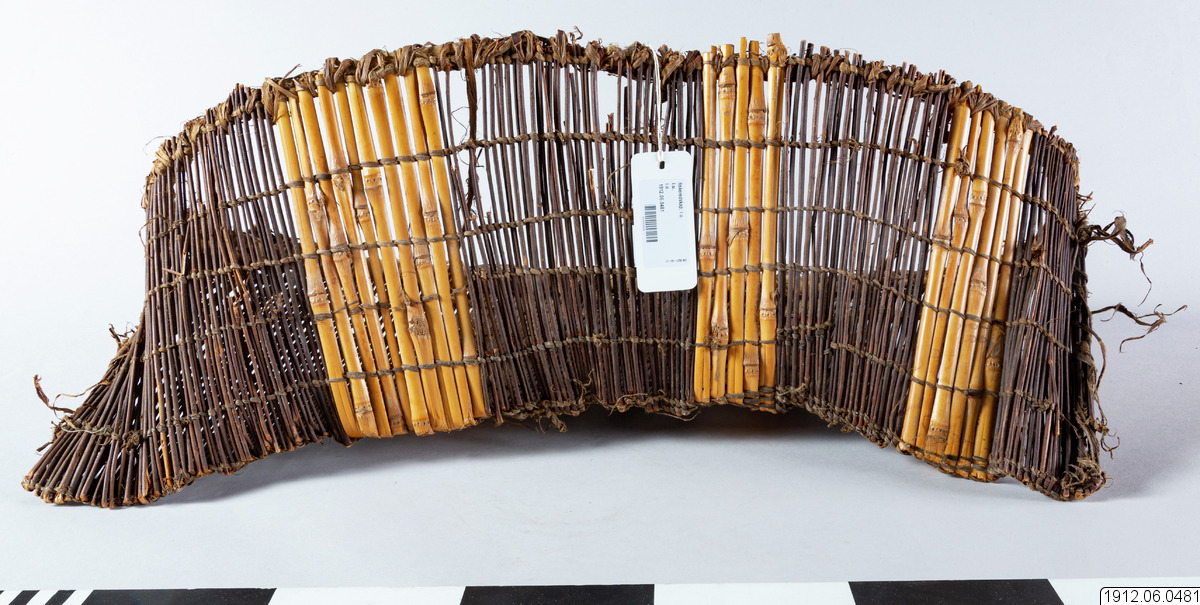
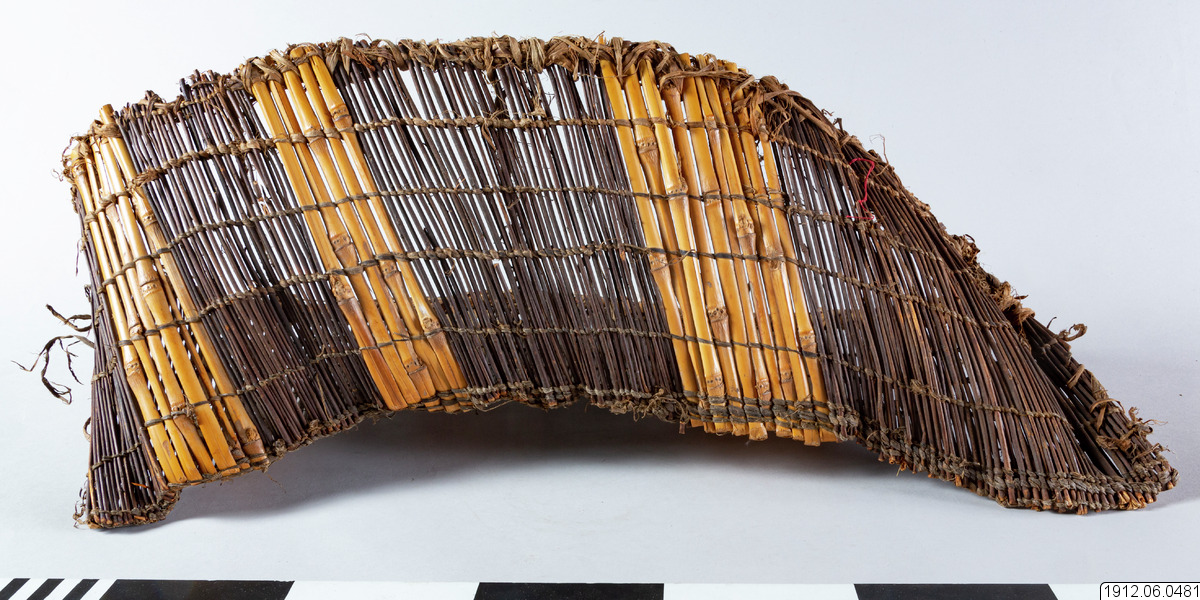
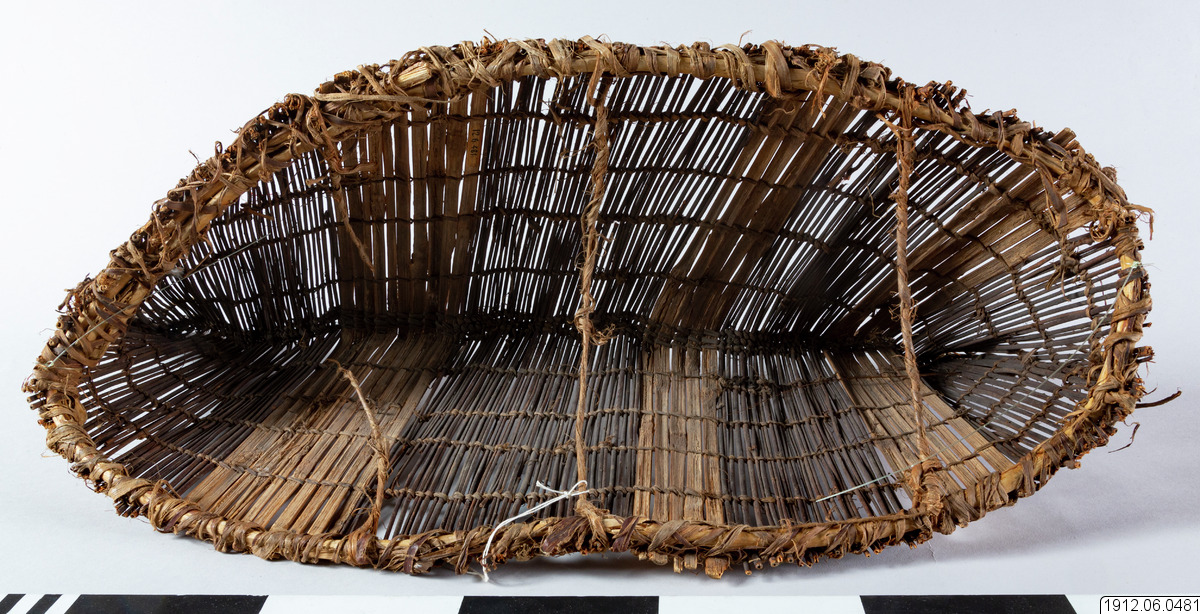
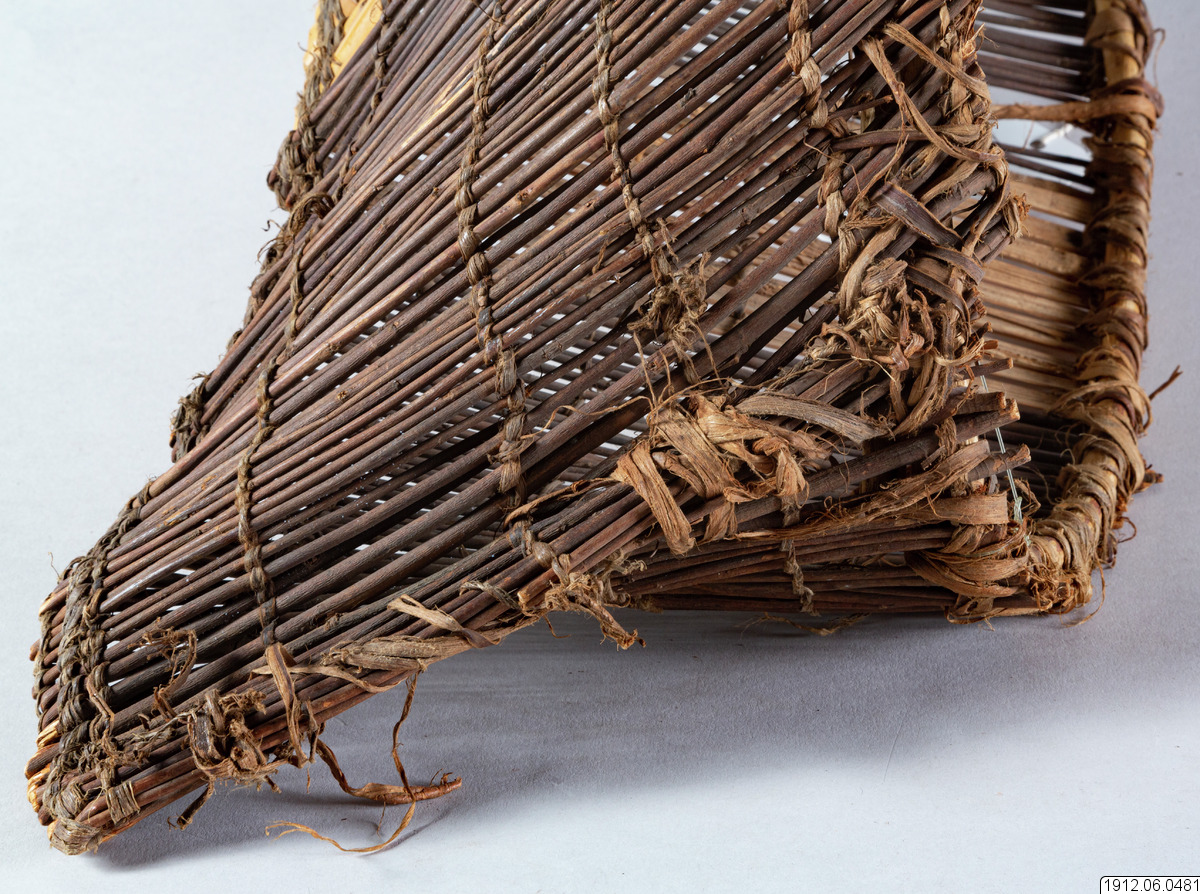
"The third net, Fig. 226, which measures only 66 cm. in length and 32 cm. in width, however, is manufactured in a completely different way. It consists, as the picture shows, of long sticks and pipe slats, which are tied next to each other. The tubes and pins, which are attached at the top to the coarse wicker, which runs around the mouth of the net, are broken at the bottom at an acute angle, whereby the net has the appearance of a keelboat. On this as well as on the previously described rakes, three bast cords are tied over the mouth so that it will not be blocked out too much when the water presses on the rake." (p. 331, von Rosen, 1916, translated from Swedish).
Stäng
|
| Publicerad text, engelska <itemDescription> |
-
"From the general consensus, the object above is called Izubyo or Hiko in the Gwembe valley. It is use in
shallow water fishing by women. It is mainly made by women using reeds, twigs and fiber. It is...
Visa hela
"From the general consensus, the object above is called Izubyo or Hiko in the Gwembe valley. It is use in
shallow water fishing by women. It is mainly made by women using reeds, twigs and fiber. It is still used
in some places but it has widely been replaced by deep water fishing which is done by men. In a few
places that it is still being used it has been modified and it is called Kazamba." (WHMZ 2021:7) The above information is based on workshops carried out in October 2020 in four villages in three districts in the Gwembe Valley of Zambia's Southern Province. The workshops were led by cultural historian and curator Victoria Chitungu Phiri representing the Women's History Museum Zambia (WHMZ) and Choma Museum, supported by a team from Choma Museum, Zambia. The workshops were part of the collaborative project Empowering women's histories: Sharing Digital Heritage between Zambia and Sweden (2020-2022) and involved 48 participants of different ages from the villages of Chisumba/Munyumbwe (Gwembe District), Siabaswi/Chief Mweemba, Siansalama (Sinazongwe District), and Madyongo (Zimba District).
Stäng
|
| Förvärvsomständigheter / i fält <itemDescription> |
|
| Beskrivning / engelska <itemDescription> |
|
| Utställning / tidigare <itemDescription> |
|
| Referens, källa <itemDescription> |
|
| Referens, publicerad i <itemDescription> |
|
| Geografiskt namn / annat <itemDescription> |
|
| Geografiskt namn / annat <itemDescription> |
|
| Land / engelska <itemDescription> |
|
| Geografiskt namn / annat <itemDescription> |
|
| Geografiskt namn / annat <itemDescription> |
|
| Händelse / var närvarande vid <itemDescription> |
|
| Händelse <context> |
-
Insamlad av Rosen, Eric von.
-
Brukad av Bisa.
-
Ursprung i Zambia, Afrika.
-
Förvärvad 1912 .
-
Utställd 1913-02-04 - i Konstakademien, Stockholm av Rhodesia-Kongo-Expeditionens utställning.
|
| Nyckelord <itemKeyWord> |
-
1912.06.0481
-
Awisa
-
Babisa
-
Bisa
-
Eric von Rosen
-
Kap till Kairo
-
Kap-Kairo-expeditionen
-
WHMZ
-
von Rosen, Eric
|
| Sakord, engelska<itemName> |
- fishing net
- fishing basket
- fishing-basket
- fishing-net
|
| Sakord<itemName> |
- fiskkorg
- fiskeredskap
- håv
- izubyo
- hiko
|
| Ämne <subject> |
|
| Inventarienummer <itemNumber> |
|
| Rättigheter för metadata <itemLicense> |

|
| Källa <presOrganization> |
Statens museer för världskultur - Etnografiska museet |
|
Källa <url>
|
|

 ARTIKLAR I WIKIPEDIA
 ARTIKLAR I WIKIDATA
 BILDER I WIKIMEDIA COMMONS


