| Typ <itemType> |
Objekt/föremål |
| Plats <presPlaceLabel> |
Afrika, Egypten |
| Description <itemDescription> |
-
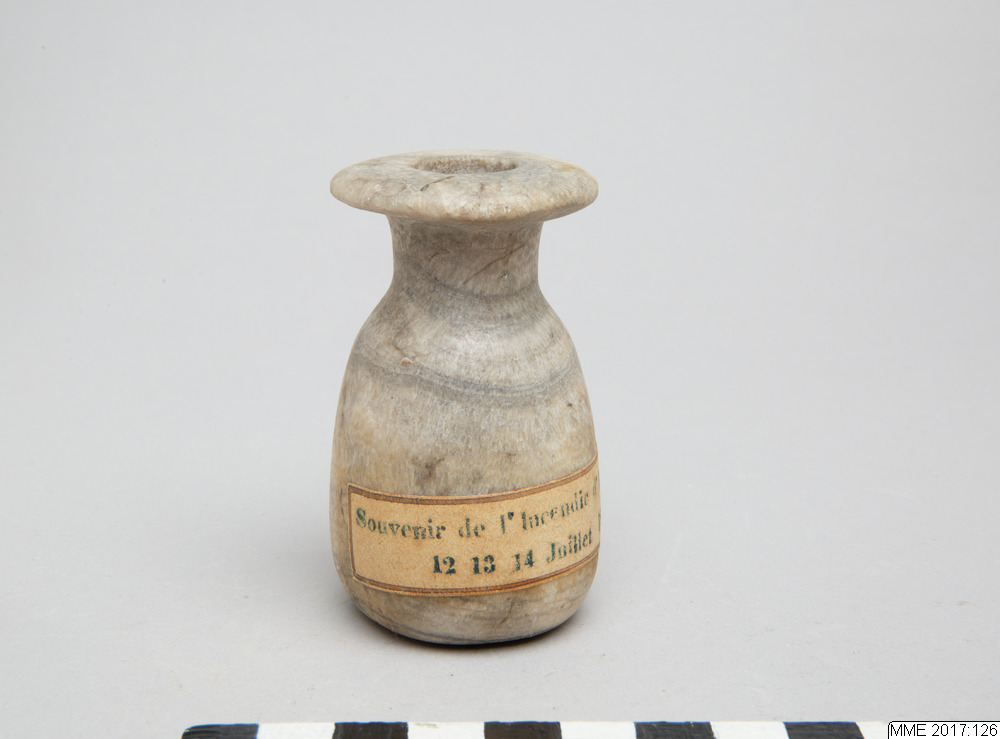
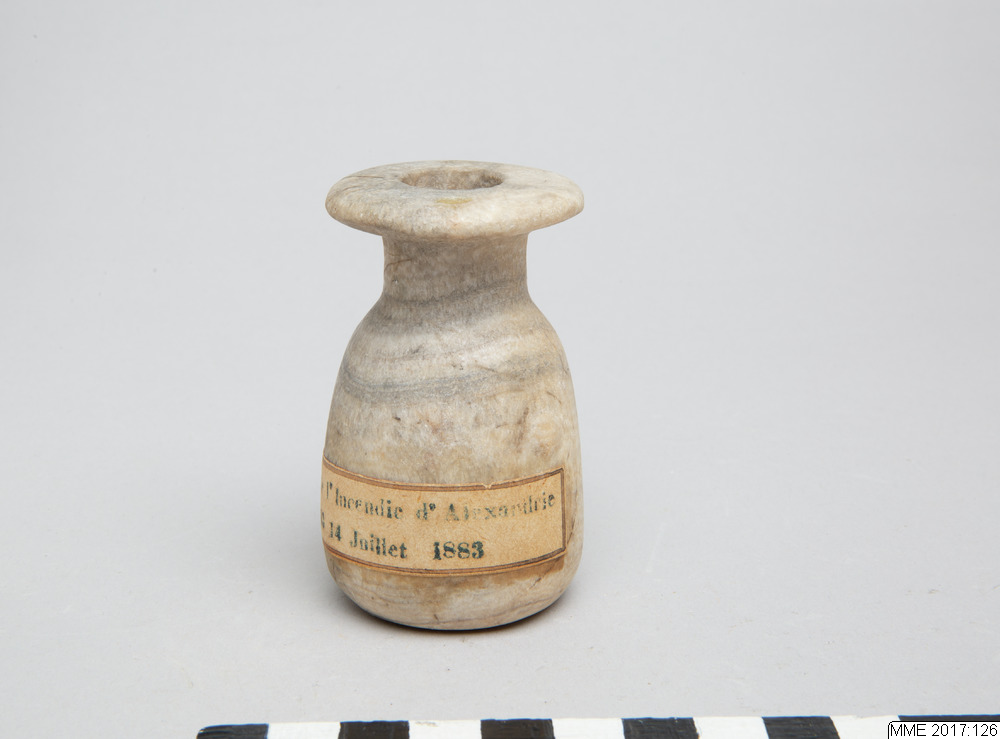
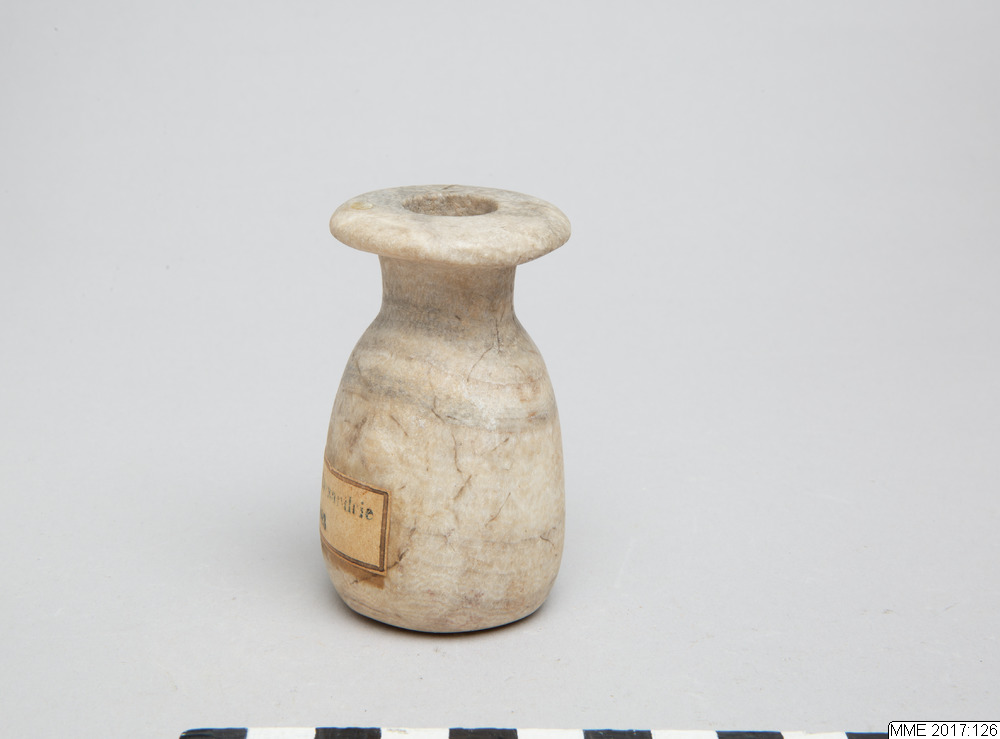
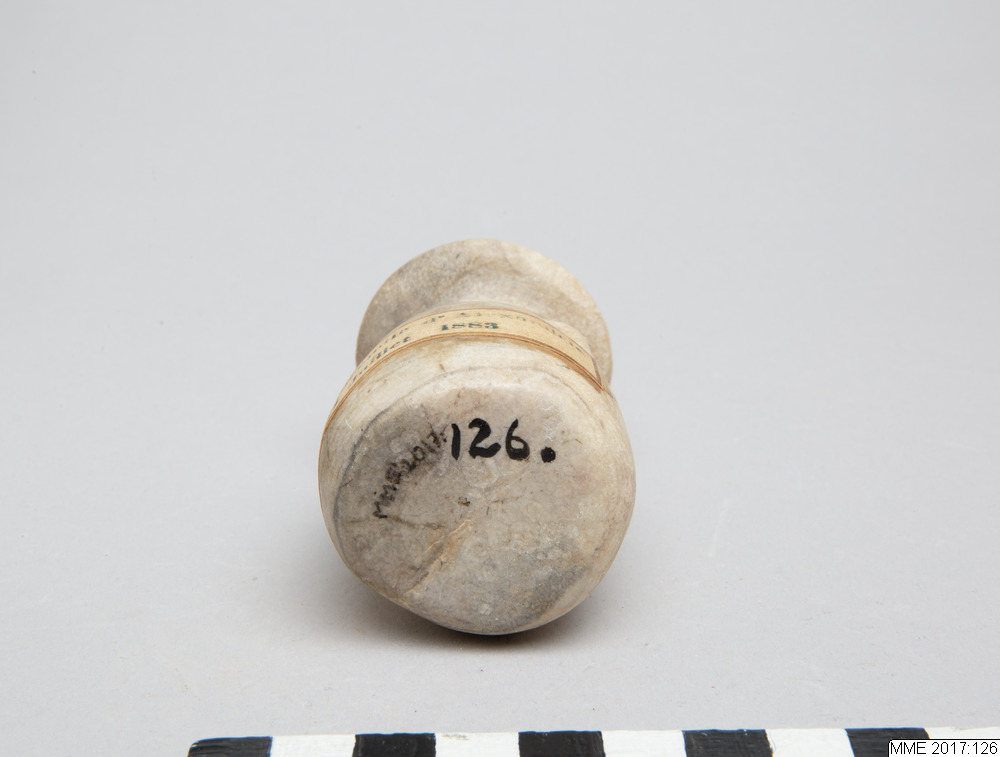
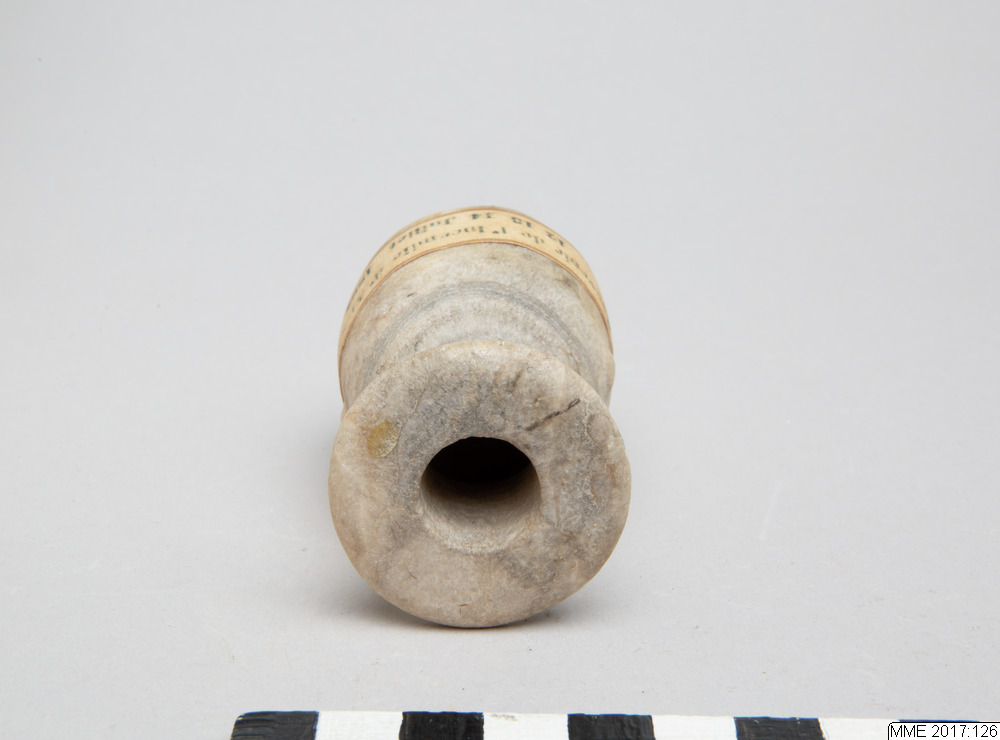
Alabastron of alabaster. Tall, ovoid body with a flattened base. Marked shoulder and a short cylindrical neck ending in a wide, flattened lip. The tag on the side of the body reads: "Souvenir de l'Incendie d'Alexandrie, 12 13 14 Juillet 1883".
|
| Inventory number <itemDescription> |
|
| Acquisition <itemDescription> |
-
Belongs to the Strängnäs collection that was formed by the objects that an Italian nobleman named Pietro Pugioli, who lived in Alexandria in the 19th century, sent as a present to the Swedish captain ...
Visa hela
Belongs to the Strängnäs collection that was formed by the objects that an Italian nobleman named Pietro Pugioli, who lived in Alexandria in the 19th century, sent as a present to the Swedish captain C. Emil Göransson in 1880. The collection was kept at the Strängnäs Museum and Library. In 1945 it was donated by Södermanlands Fornminnesförening to Strängnäs Högre Allmänna Läroverk (Strängnäs Gymnasium). The collection was deposited at Medelhavsmuseet in 1993.
In 2017 the deposition was changed into a donation since Strängnäs museum closed.
Stäng
|
| Comments <itemDescription> |
-
Regarding the tag: It is tempting to connect the text to the so-called "Bombardment of Alexandria" by the British Mediterranean Fleet, although this event occurred in 1882, one year prior to what is w...
Visa hela
Regarding the tag: It is tempting to connect the text to the so-called "Bombardment of Alexandria" by the British Mediterranean Fleet, although this event occurred in 1882, one year prior to what is written on the tag. The days and the month, on the other hand, match up perfectly.
Stäng
|
| Comments <itemDescription> |
-
An alabastron (pl. alabastra) is a long-bodied vessel, typically with a rounded bottom. It is usually without a handle, although some examples have short handles (or eyes or lugs) through which a stri...
Visa hela
An alabastron (pl. alabastra) is a long-bodied vessel, typically with a rounded bottom. It is usually without a handle, although some examples have short handles (or eyes or lugs) through which a string could be attached. The name is derived from alabaster, the white-ground stone that the earliest examples were carved from. They seem to primarily have been a vessel for perfumed oil, as indicated by scenes on vases depicting it being used by women after bathing.
Stäng
|
| Country / Findspot <itemDescription> |
|
| Geographic name, alternative <itemDescription> |
|
| Händelse <context> |
-
Förvärvad av Göransson, C. Emil, Pugioli, Pietro, Strängnäs museum.
-
Funnen i Egypten, Afrika.
|
| Material, engelska<itemMaterial> |
- Alabaster
- Stone
|
| Material<itemMaterial> |
- Sten
|
| Nyckelord <itemKeyWord> |
|
| Mått <itemMeasurement> |
-
Height / Höjd: 7,2 cm.
-
Diameter: 4,3 cm.
|
| Object<itemName> |
- alabastron
|
| Ämne <subject> |
|
| Inventory number <itemNumber> |
|
| Rättigheter för metadata <itemLicense> |

|
| Källa <presOrganization> |
Statens museer för världskultur - Medelhavsmuseet |
|
Källa <url>
|
|

 ARTIKLAR I WIKIPEDIA
 ARTIKLAR I WIKIDATA
 BILDER I WIKIMEDIA COMMONS


