Artiklar i Wikipedia som innehåller information om detta objekt eller närliggande ämnen.
Det finns inga länkar för objektet.
ARTIKLAR I WIKIDATA
Artiklar i Wikidata som innehåller information om detta objekt.
Det finns inga länkar för objektet.
BILDER I WIKIMEDIA COMMONS
Bilder i Wikimedia Commons som avbildar detta objekt.
Det finns inga bilder som avbildar objektet.
Döden som början på livet
Monterdel
Bilden:
Upphovsman: <presImageByline>Törnros, Beatrice
Upphovsrätt: <presImageCopyright>
Statens museer för världskultur
Licens: <mediaLicense>
Typ <itemType>
Utställning
Utställningstext, Korsvägar<itemDescription>
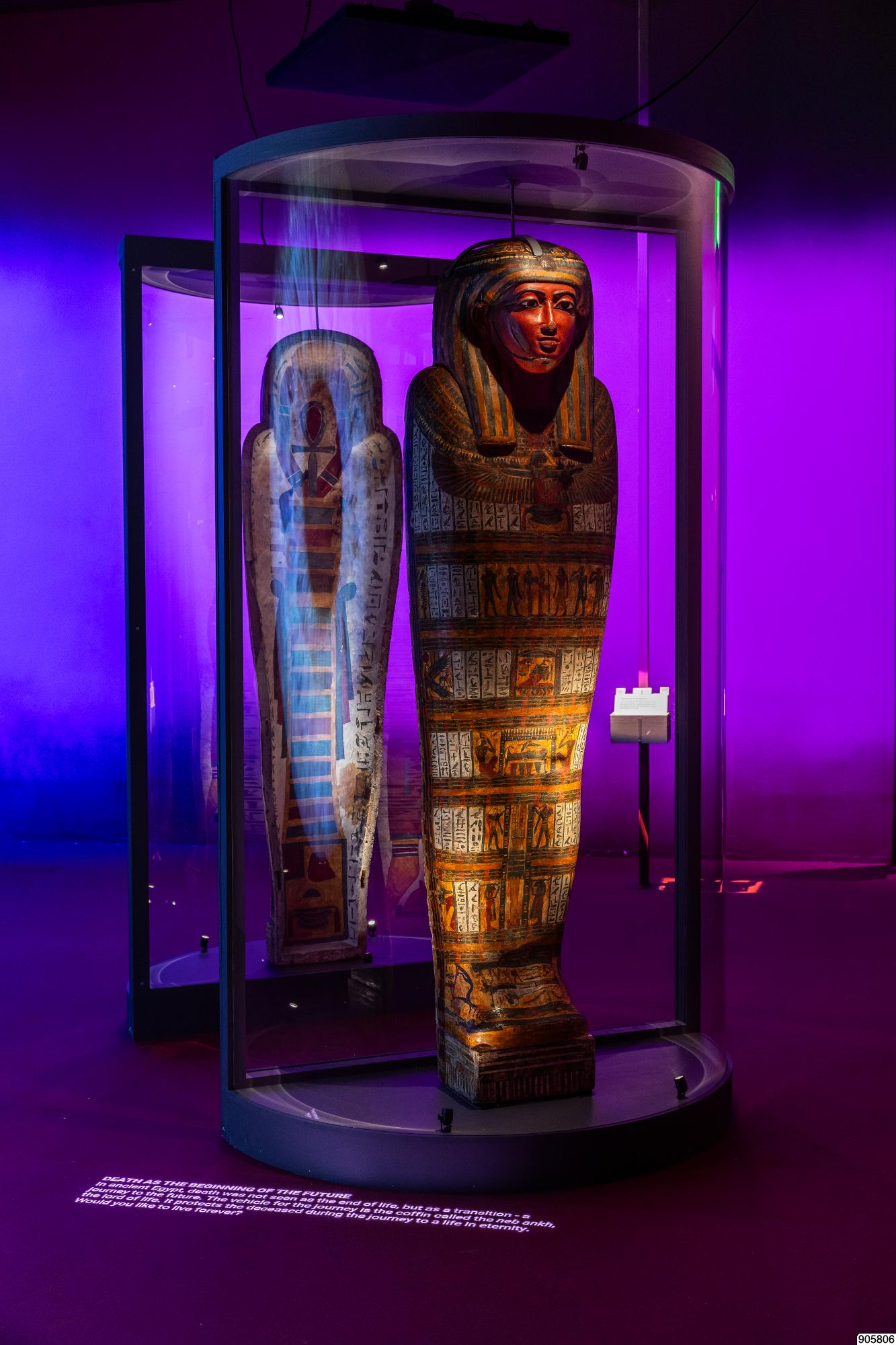
DÖDEN SOM BÖRJAN PÅ FRAMTIDEN I det forntida Egypten sågs döden inte som livets slut, utan som en övergång – en resa mot framtiden. Resans färdmedel är kistan som kallas neb ankh, livets herre. Den skyddar den döde under resan till ett liv i evigheten. Skulle du vilja leva för evigt? (Utställningstext, Existens 2024)
DEATH AS THE BEGINNING OF THE FUTURE In ancient Egypt, death was not seen as the end of life, but as a transition - a journey to the future. The vehicle for the journey is the coffin called the neb ...
DEATH AS THE BEGINNING OF THE FUTURE In ancient Egypt, death was not seen as the end of life, but as a transition - a journey to the future. The vehicle for the journey is the coffin called the neb ankh, the lord of life. It protects the deceased during the journey to a life in eternity. Would you like to live forever? (Exhibition text, Existens 2024)

 ARTIKLAR I WIKIPEDIA
 ARTIKLAR I WIKIDATA
 BILDER I WIKIMEDIA COMMONS


